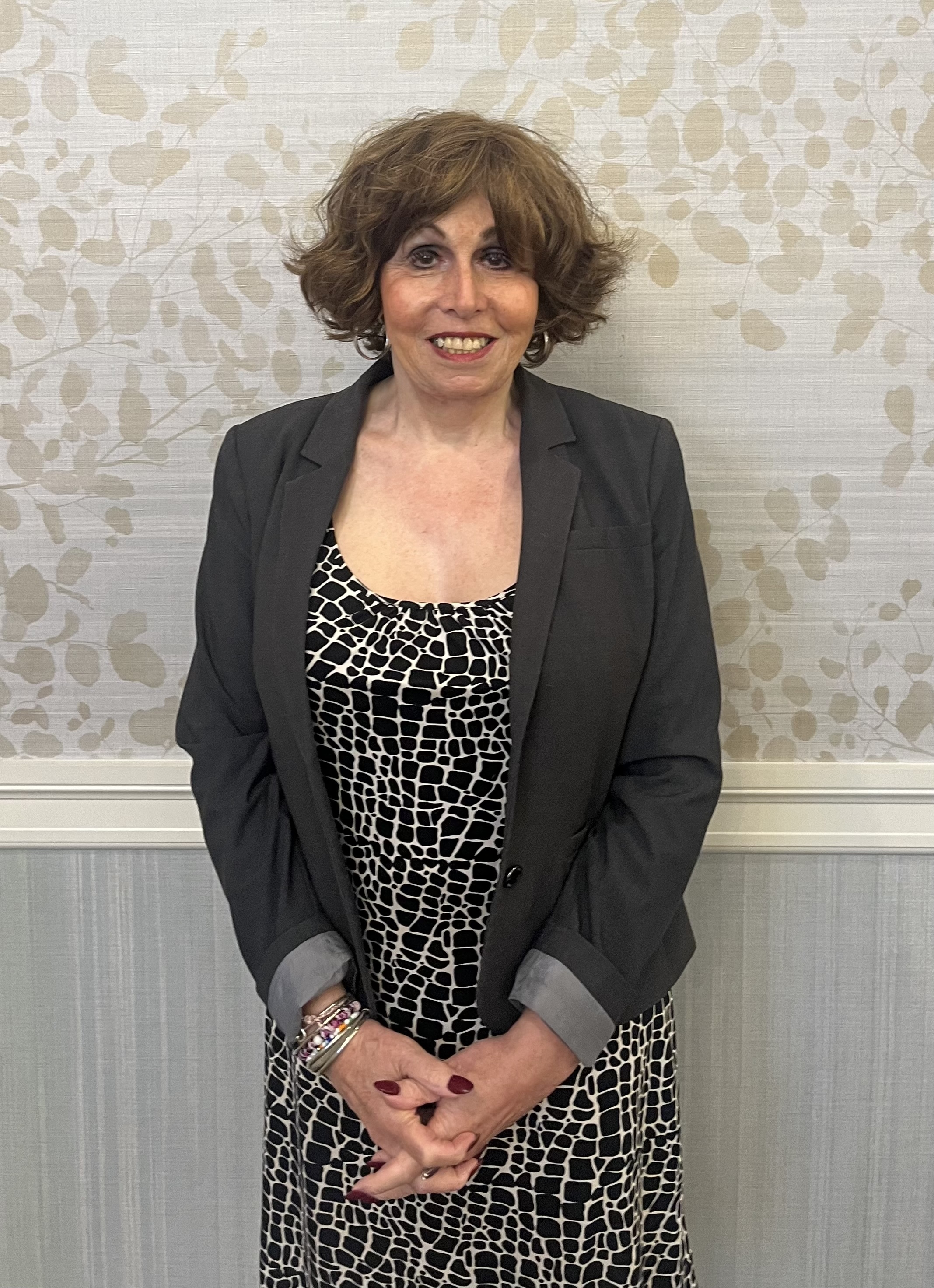
Melissa Sklarz is building a list. Names of trans people she thinks can win public office in 2029, people she is introducing to community boards, walking through fundraisers, vouching for in rooms she has spent thirty years learning how to enter. She is the past president of the Stonewall Democrats, the past board chair of the Empire State Pride Agenda, a member of the executive committee of the Queens County Democratic Party. And she is trying, deliberately, to make herself unnecessary.
"You don't need me anymore," she says. She means it as good news.
Melissa has lived in Queens, “Woodstoria,” for twenty-one years. She came in 2005, after the landlord on 23rd and 7th in Manhattan moved to triple the rent. She took the buyout, borrowed from her family, and bought an apartment near the Astoria-Woodside line. She hated it for five years. Now she calls it the smartest thing she ever did. Housing in New York, she says, is traumatic. Owning the apartment took that one fear off the table.
She did not come to the neighborhood as an activist looking for a base. She came as someone who had already spent a decade rebuilding a life. In the 1980s she was homeless and struggling with addiction. She got an apartment in 1991, a studio on 14th Street too small for a bed, and slept on a futon for twelve years. She started transitioning in the 1990s. She showed a colleague an early photo of herself, and within a month she was fired. There was no legal recourse then. It took her six years to find permanent work with benefits.
That work was at the Actors Federal Credit Union, where she started as a part-time debt collector and stayed nineteen years, rising to director. Actors are brilliant artists who often cannot manage money, and she was good at helping them. She describes it plainly as where her confidence came from. Generations of nervous, angry, confused people sat across from her, and she helped them, and she got good at it.
Her gift, she will tell you, is talking. Specifically, talking about trans people to people who are not trans. She joined the New York Association for Gender Rights Advocacy in 1996. For the first few years of the fight for trans rights in New York State, she was close to a community of one. She traveled the state explaining what trans is, why it matters, why gay rights did not automatically help trans people. She made the case to Giuliani and lost. She made it to the State Senate and got laughed at. She kept making it. It took until 2018, eighteen years, for the state to pass protections she had been arguing for since 2005.
Along the way she learned the thing she now teaches. Politics is mean, she says. People are your friends until they are not. But she is not a bridge burner. When a congressman she counts as an ally voted for a bill with anti-trans provisions, she wrote a piece calling him out, and then told him they were still friends, and meant both. When the community decided it no longer wanted uniformed police marching in the Pride parade, she carried that message to the officers herself, even though her own heart was with the ones asking to march. If one approach fails, she tries the next, and the next. She once took a two-and-a-half-hour train ride each way to shake a newly elected governor's hand and remind him of a promise. He was gone from office two months later. She still counts the trip as worth it.
This is the method: relationships, patience, and a refusal to take things personally. She jokes that she has a narrow emotional range, that it makes her good at politics. She does not have children or a spouse. She has a family of choice, a faith that grounds her, and a cat. The cat before this one was Puss, a feral rescue from a Brooklyn basement, a husky terror who left scars on her legs and slept beside her at the window. He died last year after seven years together. She waited three months and got Midge, who is younger and softer and lies on her chest. Between political seasons she travels, scuba diving in places like Indonesia and the Red Sea, a habit she picked up living in the Israeli desert in the early 1980s and resumed only after a change in federal policy finally let her get a passport that read female.
She is now turning the work over on purpose. The movement she helped start belongs to a different generation now, and she is glad of it. Ten years ago, she says, the trans leaders in the room were not people of color. Now they are, and that is as it should be. When she is honored, she has a habit of telling the room to look past her, to the women who do not get the award, the education, the job with benefits, the chance. She is clear that trans liberation, as the next generation defines it, is not hers to lead. Her remaining goals are narrower and concrete: trans equity, meaning equal footing for the large organizations doing trans work whether or not their leadership is trans, and trans people in elected office. That is what the list is for.
When asked what she wants from her neighbors this Pride, she does not point to herself. She points to the moment. These are the best of times and the worst of times, she says. Locally there is real access to power. Nationally there is a war on a great many people at once, with trans people near the bottom of the ladder, easy to single out. Her advice is strategic, the same instinct that has carried her for three decades.
"I would like for us to try to fight the battles we can win," she says, "instead of fighting all of them at once and becoming distracted."
Women of Astoria publishes monthly. Nominations via DM at @womenofastoria.