The email came while they were driving. Keira read it off their phone and told Cam to sign them up. Socrates Sculpture Park was looking for volunteers to do water testing at Hallet Cove Beach.
After training, the sampling began. On a balmy Thursday morning in July, the two took a sample from the East River and drove it to the Queens Landing Environmental Center boat launch. You collect and label the water, document details about the collection site, drop it off, and someone in a lab does the rest. They even got to go behind the scenes at the testing lab recently to film the process and a video is coming soon.
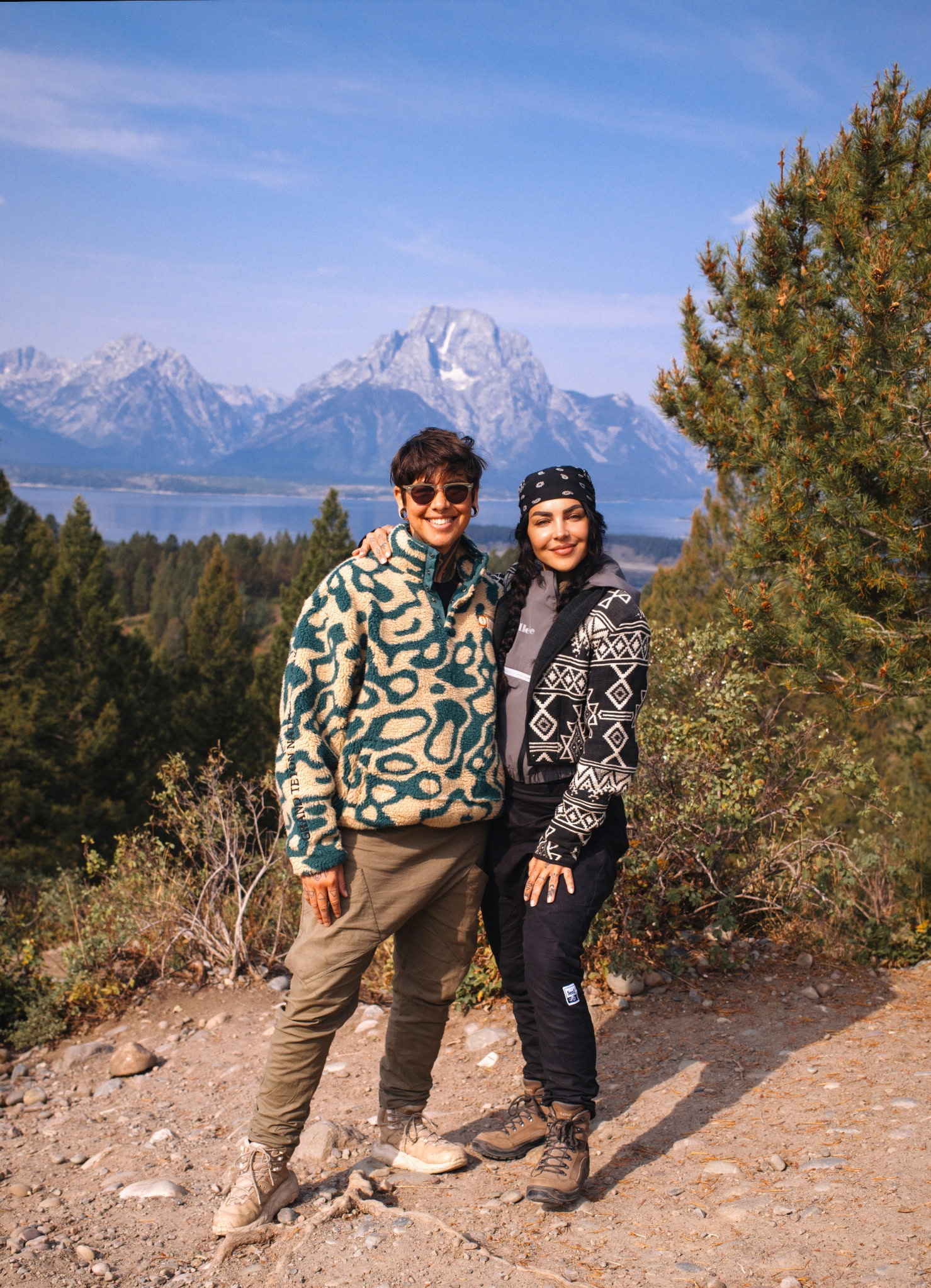
That is the shape of what Keira Cronin and Cam Van Fossen do. They find the thing already happening in the neighborhood, they participate in it, and they make a record of it.
They run a project called the Sustainable Way to document their own efforts to live with less waste and in better harmony with the planet. They don’t pretend the effort is exhaustive. "It's not a destination you ever arrive at," Cam says. "It's a lifelong effort." They highlight simple day-to-day things in their journey like how to swap a household sponge for a compostable one. They write, produce, and shoot together and Keira edits the videos. This is on top of their day jobs.
They met in Boston five years ago, coming up on that milestone in January. They had both already arrived at a version of wanting to live a more sustainable life on their own, from different directions.
Cam grew up in Milwaukee. As a kid Cam made spells out of dirt with a stick, caught and released fireflies, kept a nature journal, and started a pretend sea-otter club. As a young adult Cam led youth expeditions on the Appalachian Trail and the Delaware River, through the Princeton Blairstown Center, and came to believe that being close to nature brings people closer to each other. Her first date with Keira was a nature walk in the dead of a Boston winter. But it was the homemade vegan banana bread in a reusable container that sealed the deal.
Keira is from Weymouth, Massachusetts, twenty-five minutes south of Boston on a good day with no traffic. Keira grew up on a dead-end street next to a forest that became a golf course over the years she lived there. First there was no fence, and she and her two sisters ran into the woods and squished their toes in the mud of the ponds and named the frogs. Then there was a fence. They watched the streets get built. She calls it her first experience with deforestation.
Keira did not come to videography as a career on a straight path. Though they always had a passion for photo and video, and did both as hobbies as a child, going on to take photography classes in high school and college, it was restlessness in an Operations Director job later in life that drove her to make a change. After experimenting with video in their own time, they had an epiphany: this is it, I need to tell stories with video. Two weeks later she was standing outside a club at two in the morning waiting for a friend to bring the car around, and a stranger on the curb asked what she did. She said she had just decided to become a videographer. He said he was a videographer leaving his job and needed someone to replace him. She had the work within a week and has been doing it since.
Cam has spent 20 years in the nonprofit sector, holds a master's in public administration, and has been an Executive Director for organizations serving families and those experiencing homelessness for the better part of the last decade. Cam runs Deeper Impact Consulting, advising nonprofits on strategy and administration, and is now deliberately splitting her time to put more into the Sustainable Way. She’s also spent the last 7 years buying only second-hand and handmade clothing and making sustainable styling and fashion content.
The turn from sharing their own stories of living sustainably to advocating for sustainability in the community more broadly has a specific origin they both name: a repair cafe. Keira brought a bag with a broken zipper, someone fixed it in seconds, and the video did better than any content they had made. "You know how they say your calling is where your great passion meets the world's great need," Cam says. "All the ingredients are already in the bowl. We just needed to mix them up."
What moved them was not the view count. It was the comments. People writing that they had never heard of a repair cafe, asking if there was one near them. People expressing interest in utilizing community resources near them to live more sustainably.
They divide the work the way they divide most things, by leaning opposite. Keira wants to know how many species of bees live in New York and what each one pollinates. Cam wants to know what the bee has meant as a symbol from Egypt to the Yucatan. "I bring more of an eco-spiritual, deep-ecology" lens, Cam says. Keira brings the naturalist's. They script by argument and revision, and say the video is better for it. The one thing they hold in common and hold hardest is the call to action — getting someone to care, and then to do something.
They are careful not to pass themselves off as experts. They learn a thing and make a video about it more or less immediately. "It's not like we're botanists," Cam says. "We're sharing from where we are in our learning journey."
They do not claim it is easy. They feel sick every time the vegetables at the grocery store come wrapped in plastic. The farmers market is better but they cannot always get there. A hydroponic system in the kitchen has failed twice and is, on the third try, finally growing something. "We'll never be perfect and it's hard living in a city," they say. But they stay anyway, and they make the case that the city gives back what it takes — public transit, walkable streets, composting at the curb, Astoria Park Alliance cleanups, thrift shops on 31st Avenue, and a shoreline with lots of parks.
What they want from the work is smaller than a movement and larger than an Instagram like. Keira wants to reignite the feeling that the world is alive and worth being a steward of. "We're living on a living being," they say. "We need to remember that." Cam wants people to stop believing that buying something can fill a need that community and nature are supposed to fill. "The earth gives us so much of what we need to be happy," Cam says. "It's a different type of satisfaction. A deeper satisfaction."
You do not have to live the way they live, they say. Pick one thing. Then do it again and again.
Keira Cronin & Cam Van Fossen run the Sustainable Way and Deeper Impact Productions: www.deeperimpactproductions.com or @thesustainableway